Clyde Hopkins was never an artist who sat neatly inside the usual account of British abstraction.
That is partly because the usual account is too tidy. It likes its movements, its schools, its clean lines of influence. Hopkins never quite did that. His work is too agile for it - too funny, too musical, too odd, too formally alert.
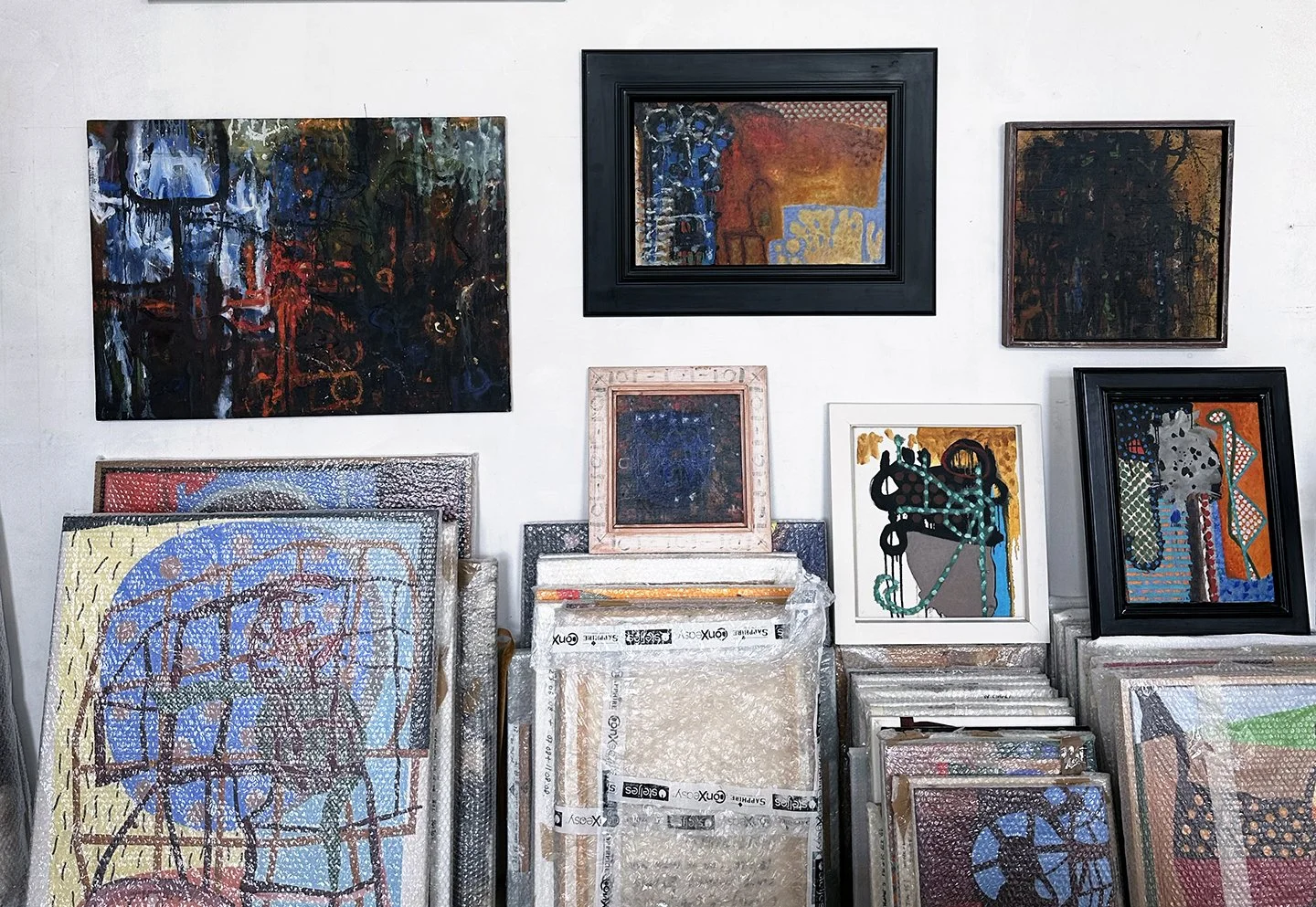
The new book, Clyde Hopkins: Paintings on Paper, focuses on a remarkable body of work made between the early 1980s and the mid 1990s. It is not a supplement to the paintings. It isn’t a side room, a footnote, or a collection of preparatory studies. These works on paper are where much of Hopkins’ intelligence is at its most immediate. The line is quicker. The colour is more exposed. The rhythm of the picture is easier to hear.
Peter Doig recently remembered first visiting Hopkins’ studio at Chelsea. Clyde asked him whether he was “the David Byrne of painting” - the kind of painter, he said, who might paint “a giraffe playing a saxophone.”
It is a perfect Clyde remark. Absurd, funny and strangely exact.
It also says something important about the work. Hopkins’ paintings are often off-centre, but never casual. They are playful, but never lightweight. They have humour without flippancy, structure without stiffness and a pictorial intelligence that keeps shifting between improvisation and control.
Paintings on Paper is part of a wider attempt to let Clyde Hopkins be seen properly again - not simply as an overlooked British painter, but as a singular artist with his own pictorial language: eccentric, rigorous, inventive and unmistakably his own.