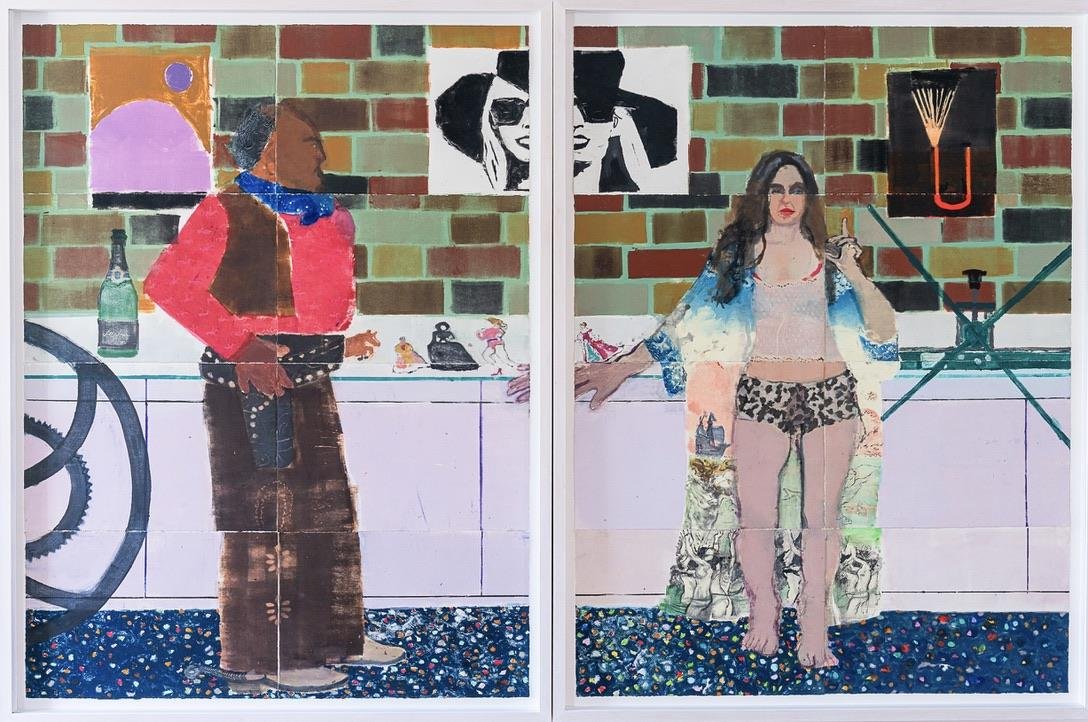
Samantha Cary, The Cowboy and the Concubine, 2022-23
Samantha Cary’s large monotype places two figures in a kitchen. The encounter is funny, theatrical and slightly combustible. It is one of four works in my August Collector’s Note, the latest paid piece on Blackbird Rook’s Substack.
Each month, I choose a small number of works that I think deserve closer attention. I explain what caught my eye and provide some context on the artists. August’s note brings together four very different works.
Gabriella Day’s large painting is playful and awkward. She has recently completed her MFA at the Slade and is at an interesting early point in her career.
Kate Burling’s small oil painting turns cherries, folded fabric and landscape into something strange and bodily. It is immediately attractive, then becomes harder to pin down.
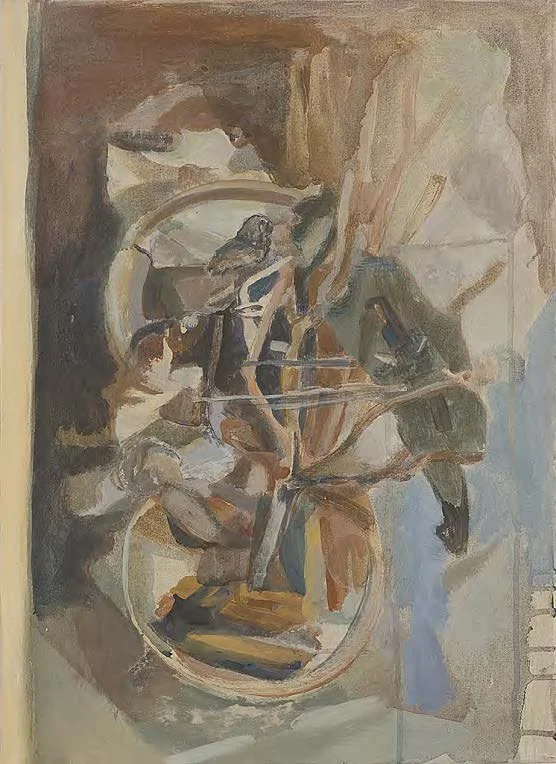
Thomas Hylander’s Pocket Mirror is a dense little painting in which a domestic object appears to absorb the muddle of the room around it. The longer you look, the less certain it becomes.
Samantha Cary’s two-part monotype completes the group with its kitchen encounter, poised somewhere between comedy and confrontation.
The Collector’s Note is one part of a much larger body of writing. The Substack archive now contains more than 100 pieces on art, artists, collecting and the culture around it.
For artists, there is The Invisible Curriculum, on the things art school rarely teaches: emails, money, studio visits, follow-up, praise, administration and the delicate business of not being considered too difficult. Outside the Studio is a long-form field guide to being an artist today, while The Artist-Dealer Relationship examines what makes that relationship work and how it begins to go wrong.
I have also written about artist estates, from what an artist should put in order during their lifetime to the decisions eventually left to those who inherit the work.
For collectors, there is a two-part Collector’s Guide to Contemporary Art, alongside pieces on where art is bought, how galleries make and lose money, the anxieties surrounding taste and the tired instruction to “buy what you love”.
Other essays look at bad actors, secondary-market trickery and the difference between serious dealers and brassy opportunists. What the Epstein Files Reveal About the Art World considers how culture helps power to look civilised, which is one of the art world’s older and less attractive talents.
There are also shorter pieces devoted to individual works and artists, as well as writing on studios, attention, judgement, money, class, technology and the increasingly peculiar business of making and collecting art inside contemporary culture.
The archive is written from both sides of the table. Artists and collectors are often treated as inhabitants of separate worlds. In practice, they are standing in the same room, looking at the same object, each wondering what the other knows and pretending that money hasn’t changed the atmosphere.
If you are interested in contemporary art, considering starting a collection or simply want to understand why one artwork might repay attention, begin with the August Collector’s Note and browse from there.