ALIEN HAND
Alison Blickle and Irini Karayannapoulou
March 6 – March 21, 2026
Presented by Blackbird Rook at General Assembly
12 St George Street, London, W1S 2FB, GB
Alien Hand brings together Alison Blickle (Los Angeles) and Irini Karayannopoulou (Athens) in a conversation about divinity, embodiment and the strange mechanics of making images. The title borrows from “alien hand syndrome”, a rare neurological condition in which a limb appears to act on its own. It is a phrase that refuses the sci-fi reading and points to something closer and slightly more unsettling - that moment when you do something before you have decided to do it, when the body seems to get there first. As a metaphor, it is almost uncomfortably accurate for painting: the odd truth that the strongest parts of an image can arrive like a visit, not a plan.
That tension sits at the centre of the exhibition. Both artists are invested in the push and pull between control and release, between a painting you steer and a painting that takes the wheel for a while. The “alien” here is not extraterrestrial but intraterrestrial - the unfamiliar part of the self that turns up mid-process and insists on being heard. Alien Hand reframes authorship as something unstable, and the studio as a site of visitation. In this context, the artist becomes a kind of medium, and the surface becomes a field where intuition, impulse and the unplanned are allowed to speak.
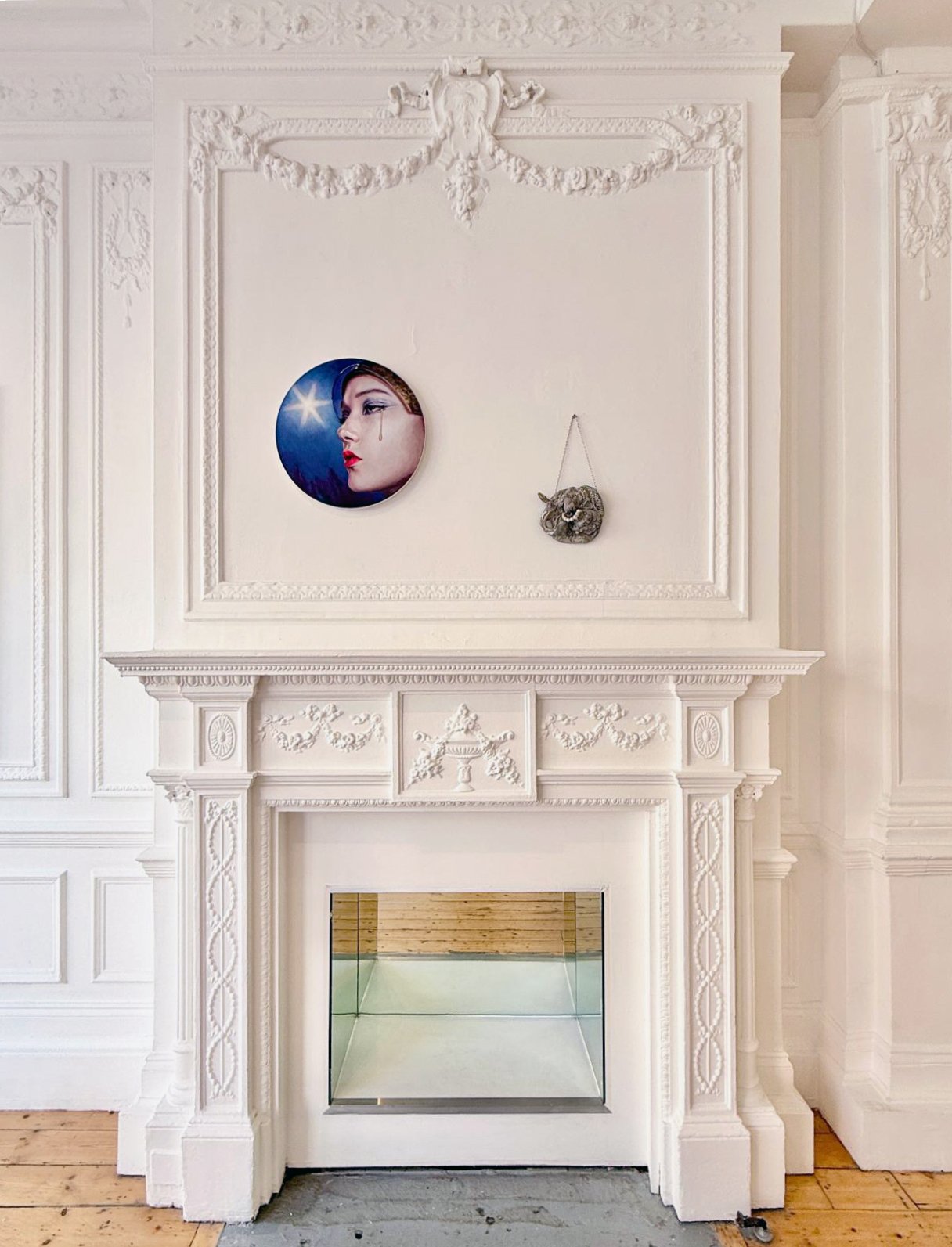
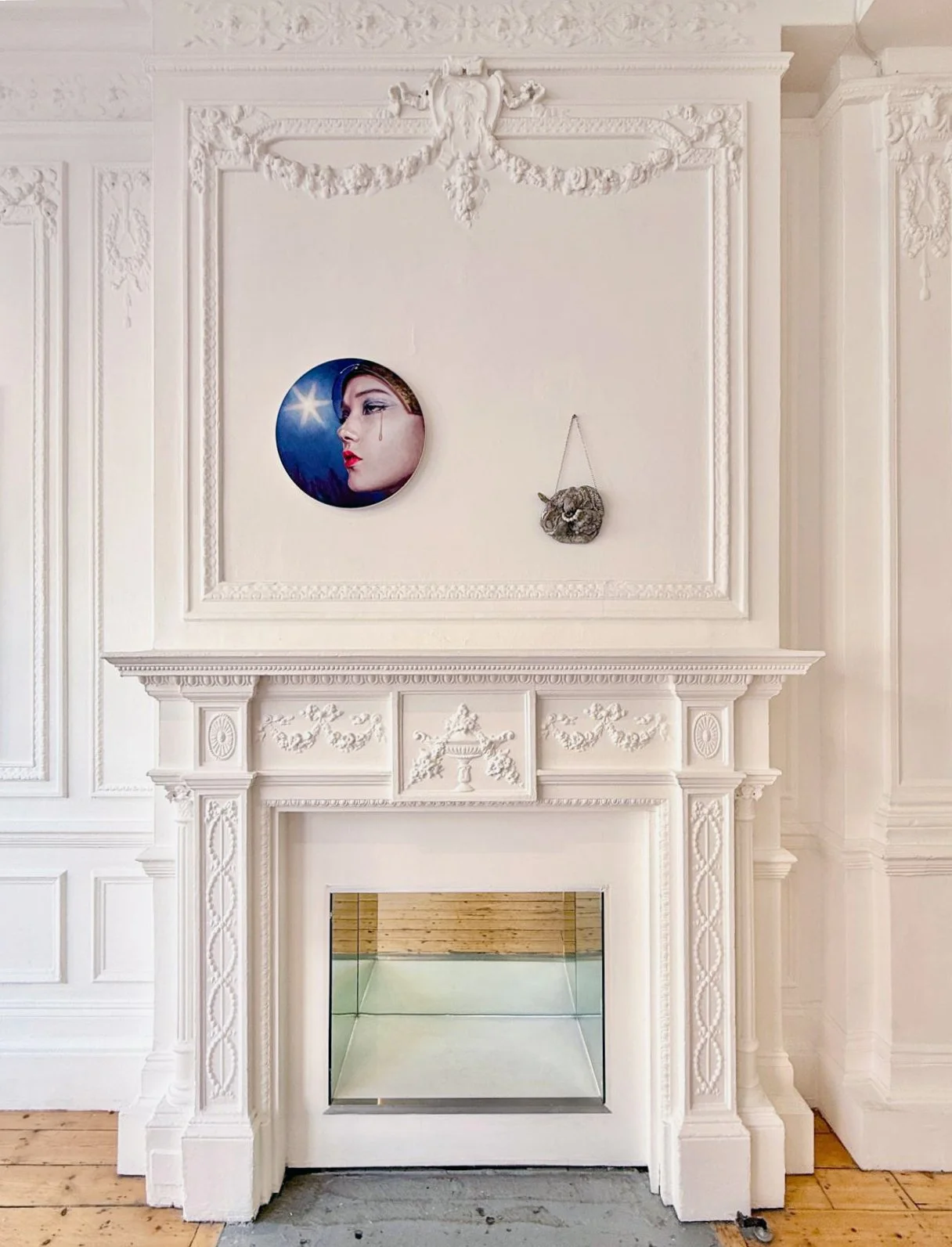
Blickle’s paintings often begin in recognisable terrain - the figure, the scene, the body as a stage - and then slip into something mythic without becoming costume drama. Her work is steeped in a personal iconology of archetypes, but the result feels closer to contemporary psychology than to illustrative fantasy. In Alien Hand, women occupy charged spaces where gestures read as intimate and slightly ceremonial, as if the everyday has developed an undertone of ritual. The surfaces are assured but not polished. You sense decisions being made, revised and reasserted. These are paintings that behave like events rather than illustrations - small theatres of attention, desire, unease and humour.
Karayannopoulou approaches the problem from another direction - through editing, interruption and reassembly. Moving between painting, collage, film and publishing, she builds images that carry the feeling of a prior life: something lifted, filtered, glitched, then made physical again. Her giclée-printed paper works reworked with acrylic sit in an ambiguous zone between the mass-produced and the hand-touched. They are seductive and suspicious at once - flirting with glamour, then undermining it, as if the image is performing and questioning itself simultaneously.
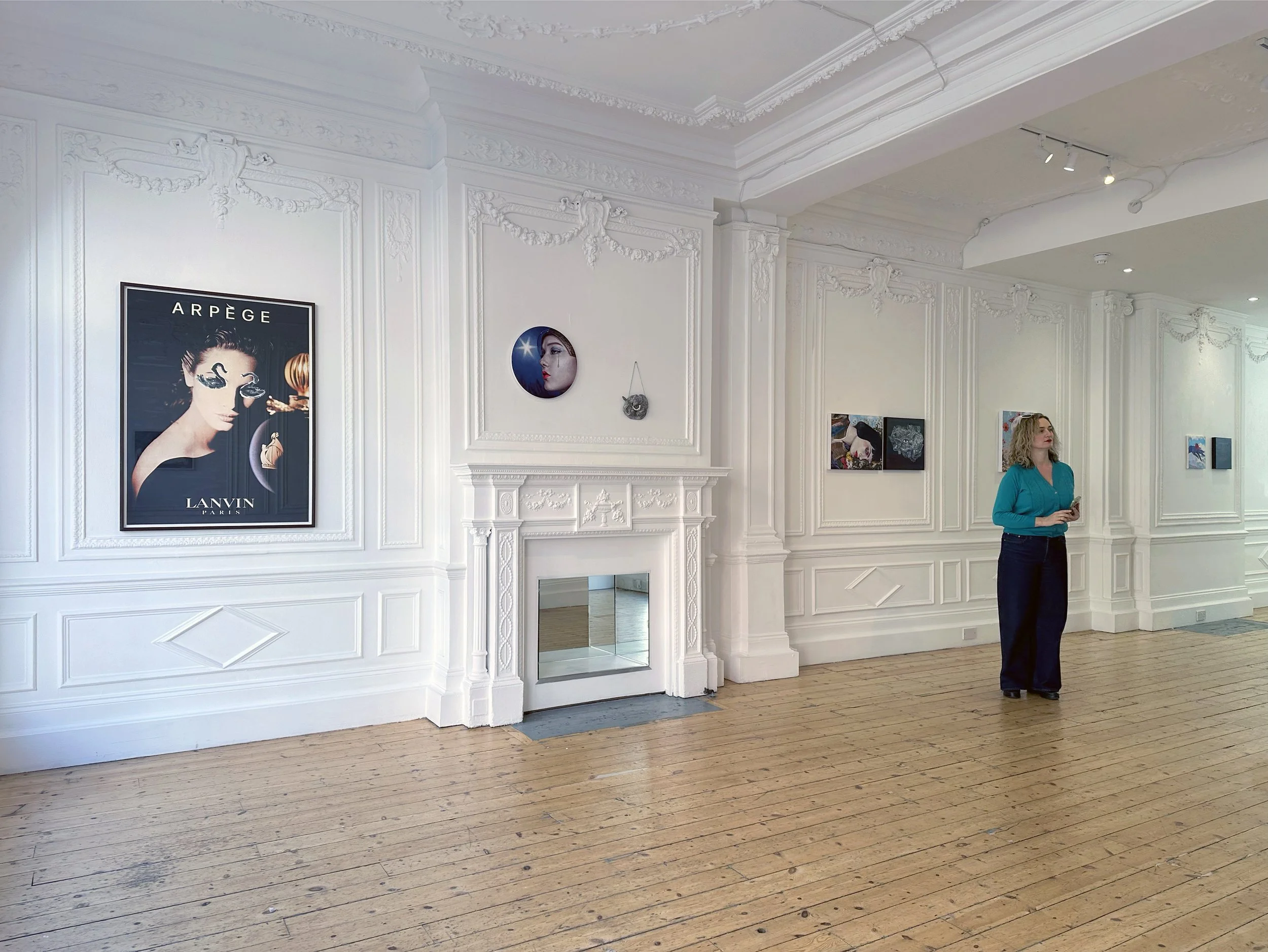
Bringing these two artists together is not about forcing a literal collaboration. It is more like placing two tuning forks in the same room. Forms reappear in altered states, gestures echo, and a shared set of frequencies keeps surfacing: the feminine image as avatar, oracle and phantom; the body as a site of projection; the question of who is really “acting” when an image takes hold. The distance between Los Angeles and Athens matters here - different light, different speed, different mythology on the street - but the exhibition does not meet in the middle by compromise. It meets in a third space: a shared psychic studio where motifs resonate across distance, and where influence travels without anyone needing to claim it.
Alien Hand proposes painting as an act of devotion without solemnity - serious, playful, intuitive and intense, with an undercurrent of rebellion. In the tension between control and release, sacred and profane, Blickle and Karayannopoulou reveal the “alien” not as foreign but as a deeper articulation of the self: the part that arrives unannounced, interrupts the will to control and, for a moment, makes the hand feel like it knows something the mind has not yet admitted.