Felicitas Aga - Fjordgirl 1
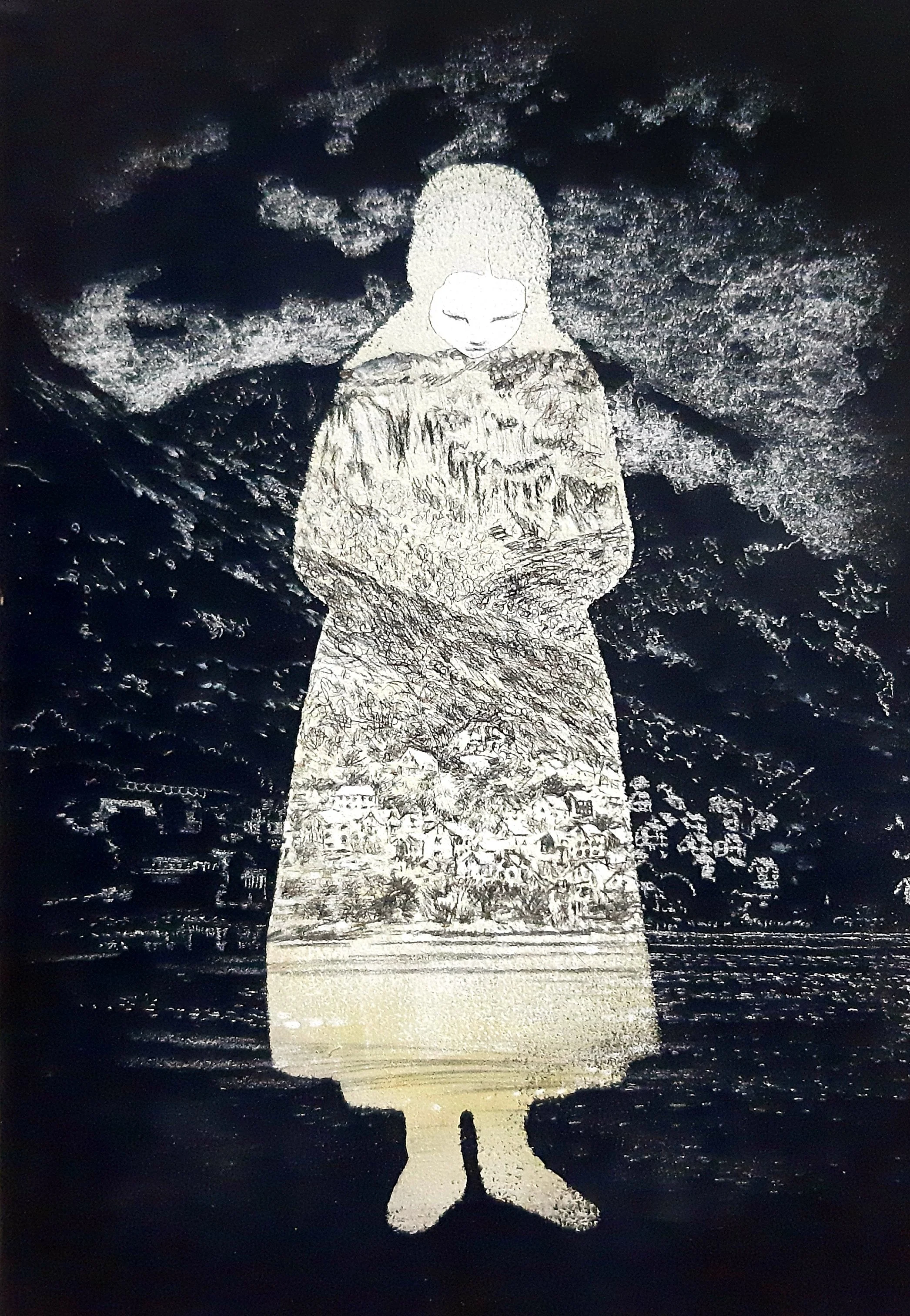
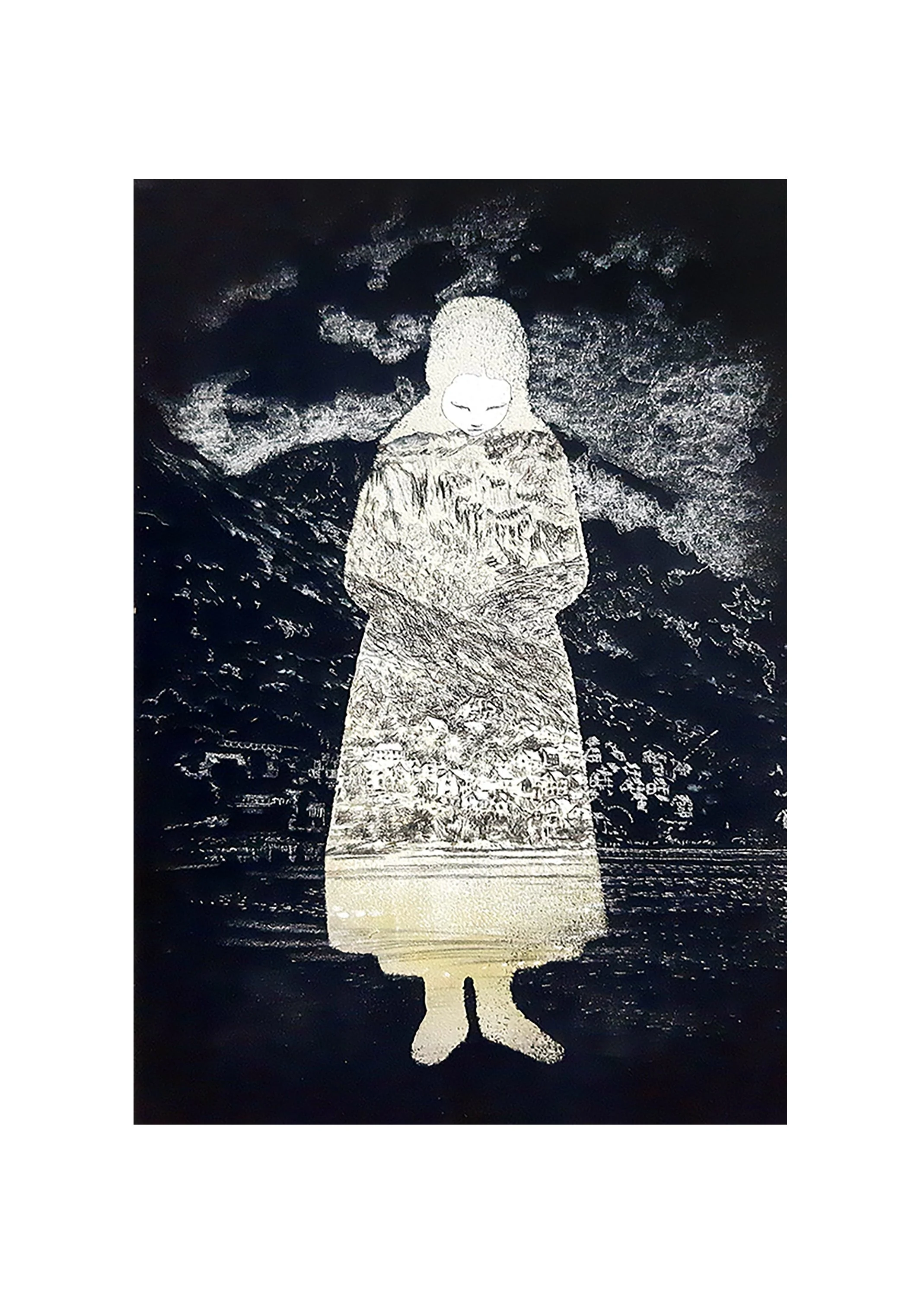
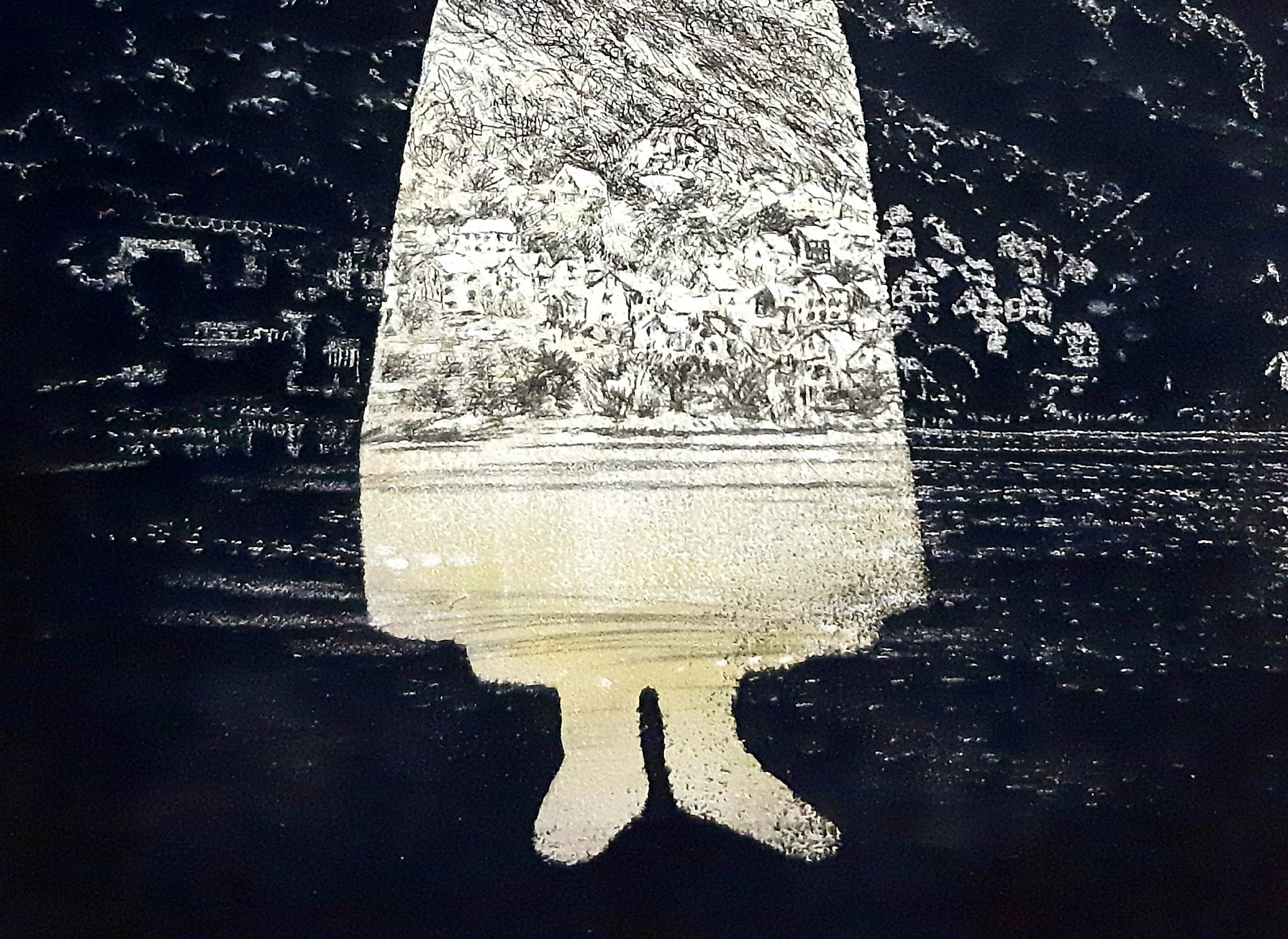
Felicitas Aga - Fjordgirl 1
Digital Print on Hahnemühle German Etching Paper
Image size: 200mm x 267mm
Paper size: 340mm x 407mm
Felicitas Aga's prints arise from a practice steeped in story and ritual. Though these images originate in paintings made on offcuts of wood - irregular pieces marked by age and accident - the prints carry forward the qualities that first defined the source material: a feeling of something half-remembered, half-glimpsed, as if returning from the deep pocket of a childhood tale.
Aga's work draws on the folklore of her upbringing - the forests, mountains and medieval towns of Germany and Norway, and the darker, less domesticated fairy tales that circulate there. These influences are evident across her practice, from the moths, branches and silhouettes of her recent paintings to the symbolic, slightly disquieting forms of the print series. The Bavarian folk stories collected by Franz Xaver von Schönwerth - tales full of strange metamorphoses, abrupt transitions, and narrative gaps - form an important backdrop. Like those stories, Aga's images do not explain themselves. They begin in the middle of something, taper away, or shift tone without warning. They operate less as scenes than as atmospheres.
Her use of stencilling, derived from large, energetic charcoal drawings, underpins the clean-edged silhouettes that recur across her work. But where her paintings often stage layers of colour, texture and symbolic fragments, the prints distil these impulses into something quieter, more concentrated. Figures, animals, plants and objects appear like apparitions - not illustrative, but symbolic in the older sense: forms that gesture beyond themselves.
What gives the prints their particular charge is the tension between surface and depth. The original paintings carried the grain, scars and uneven topography of the wooden supports; the prints retain that tactility, not as ornament but as a kind of residue - the trace of a story told once and retold again through another medium. Aga has long moved between painting, drawing, drypoint, silkscreen and linocut, and her approach to these prints is similar: not as a stylistic departure, but as a continuation of that impulse to layer, revise, and reanimate.