Justin Mortimer
Justin Mortimer’s works on paper do not feel like studies in the conventional sense. They are not preparatory, not subsidiary, not polite smaller versions of the paintings. They are more exposed than that. In them, the machinery of the image is left visible: joins, erasures, transfers, rubbed-out passages, half-formed bodies, broken architecture, colour that appears to have leaked in from somewhere else.
Mortimer first came to attention very young, winning the BP Portrait Award in 1991 while still closely connected to the Slade. That might have fixed him as a portrait painter of a certain kind - successful, skilled, legible. Instead, over the following decades, he moved away from likeness as a form of social confirmation and towards something more unstable: figures without clear identity, bodies interrupted by screens, remnants of violence, rooms that behave like landscapes, landscapes that feel like rooms.
These recent works on paper, made between 2023 and 2026, belong to that later world. They are contemporary not because they illustrate current events, but because they understand how images now reach us - broken, partial, mediated, morally exhausting, impossible to place cleanly.
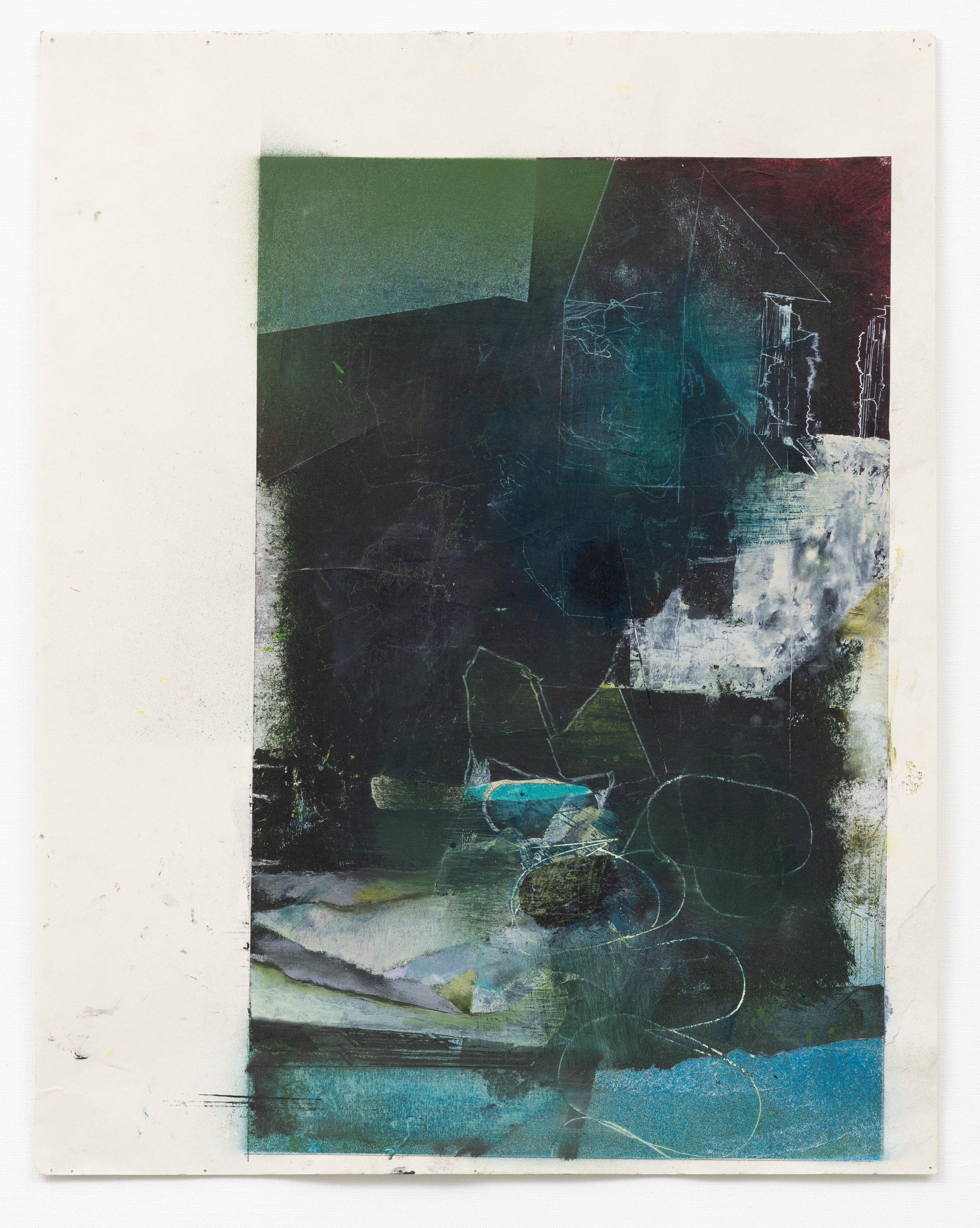
Work on Paper, 2023, oil, acrylic, enamel, ink and pastel mounted on paper, 46.8 x 29.7 cm
“I’m painting what I’m scared of.”
Mortimer has often spoken about aftermath rather than event. That distinction is important. His images rarely show action directly. They show what remains once action has already happened - a garment, a body, a screen, a building, a trace of colour, the suggestion of someone who has either just left or may never have been fully there.
In the recent VEIL exhibition at OHSH Projects, Mortimer’s Pelt, Kammer and Zone works were framed around absence, post-event remains, digital glitches, broken screens, displacement and the return to drawing. That language is useful here, but only up to a point. These works do not need to be decoded as symbols. They are stronger as pictures that resist full recovery.

Work on Paper, 2024, oil, acrylic, ink and pasted paper on three sheets mounted on paper, 42 x 68.8 cm

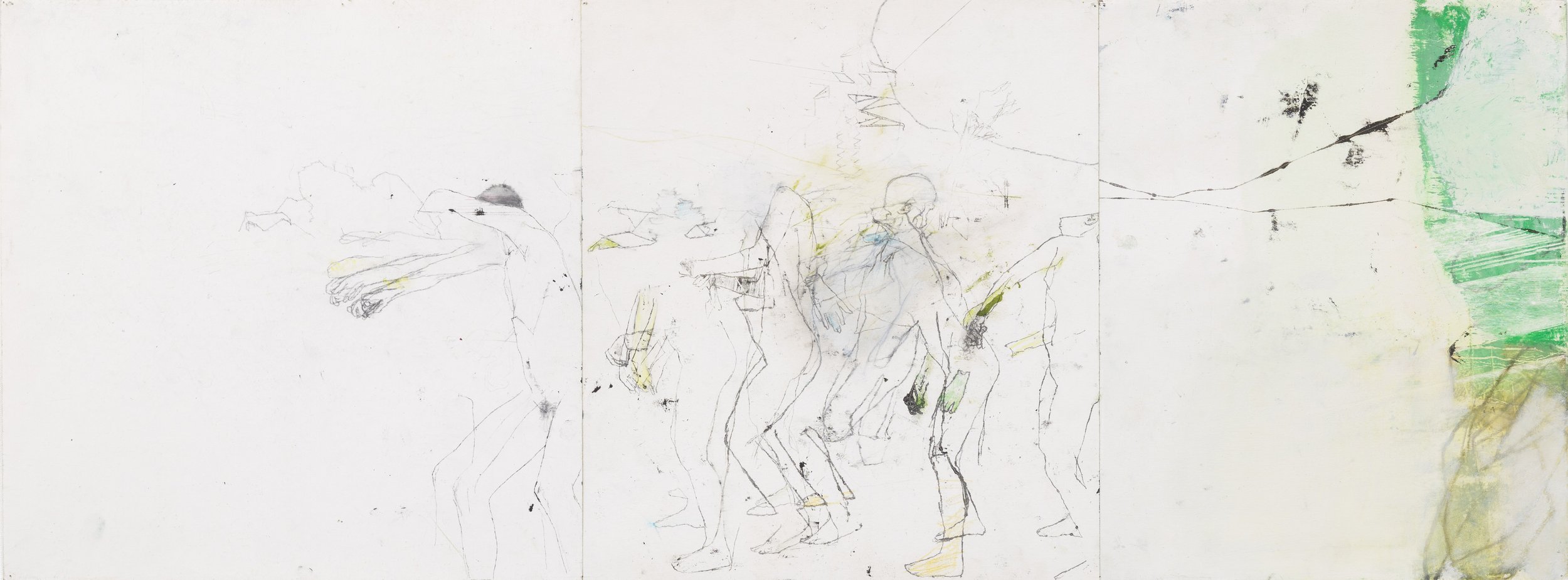
Work on Paper, 2024, oil and pastel on three sheets mounted on paper, 42 x 68.7 cm
“Things are always more interesting when you don’t know the full picture.”
The Bosnian war has been described by Mortimer as an early trigger in his thinking, and later bodies of work have drawn on images of conflict, social unrest, medical imagery, protest, refugees, outsiders and the visual debris of the news. But it would be too simple to treat him as a painter of specific events.
The more interesting point is that he does not make reportage paintings. He takes images already compromised by circulation - from books, news, screens, found photographs, digital fragments - and pushes them back into painting, where they become slower and stranger. The result is not a message but a condition: the feeling of living among images that are urgent, violent, seductive, corrupted and almost impossible to trust.
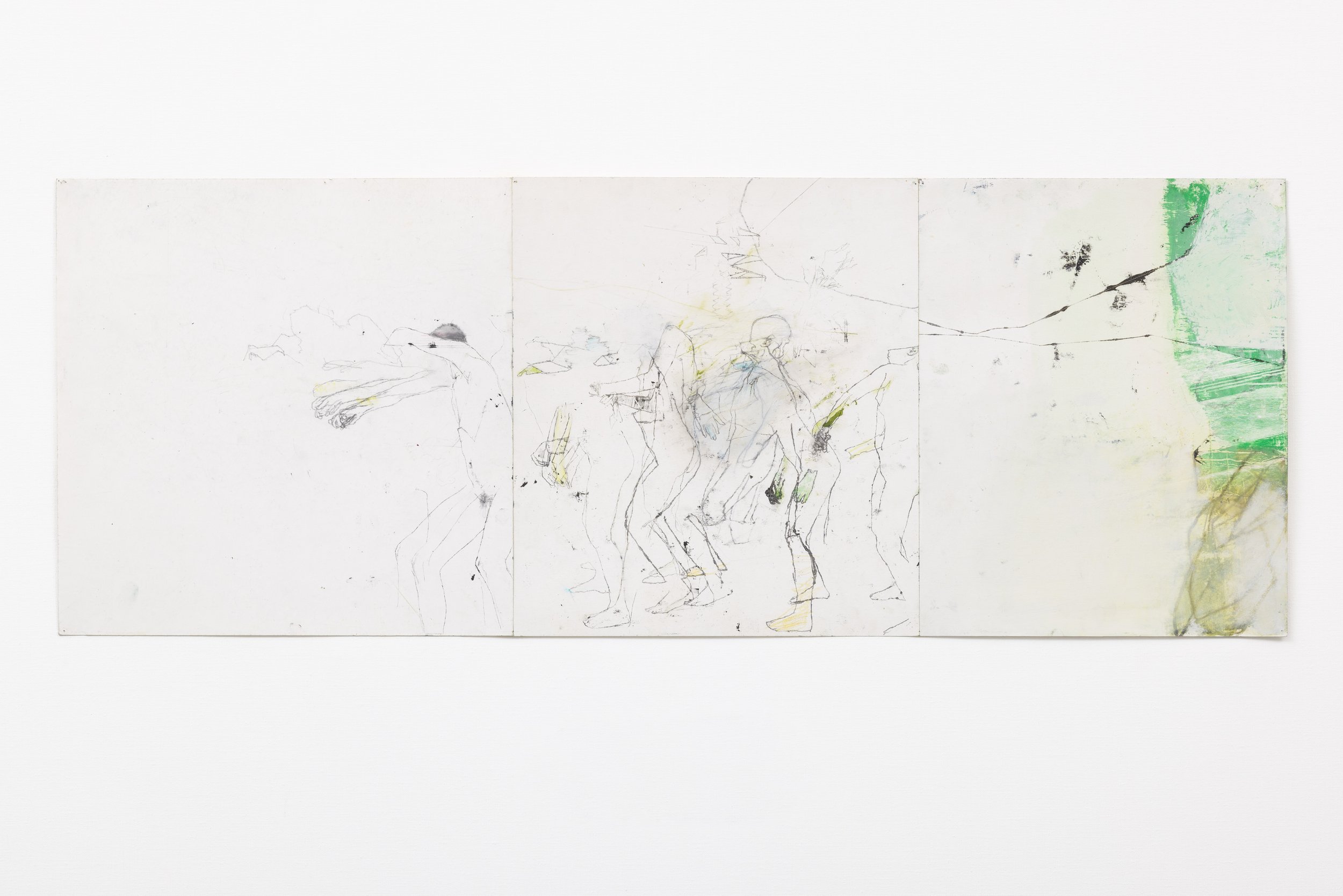
Work on Paper, 2024, oil, charcoal, watercolour and pastel on three sheets, 42 x 113 cm

(detail)
Some of the strongest works here are also the least insistent. The pale, wide sheets ask for a different kind of looking. At first they may seem almost empty, but the emptiness is active. Lines gather into possible figures, dissolve into landscape, then become fragments of architecture or movement. They have the strange openness of a rehearsal, but also the charge of something remembered under strain.
The works on paper bring Mortimer’s process closer to the surface. In the large canvases, his images can feel cinematic - staged, immersive, almost architectural. On paper, the logic is more nervous and immediate. A sheet can be torn, joined, patched, erased, placed beside another sheet and made to behave differently. Several of these works unfold across two or three pieces of paper, so that the join becomes part of the image’s meaning.
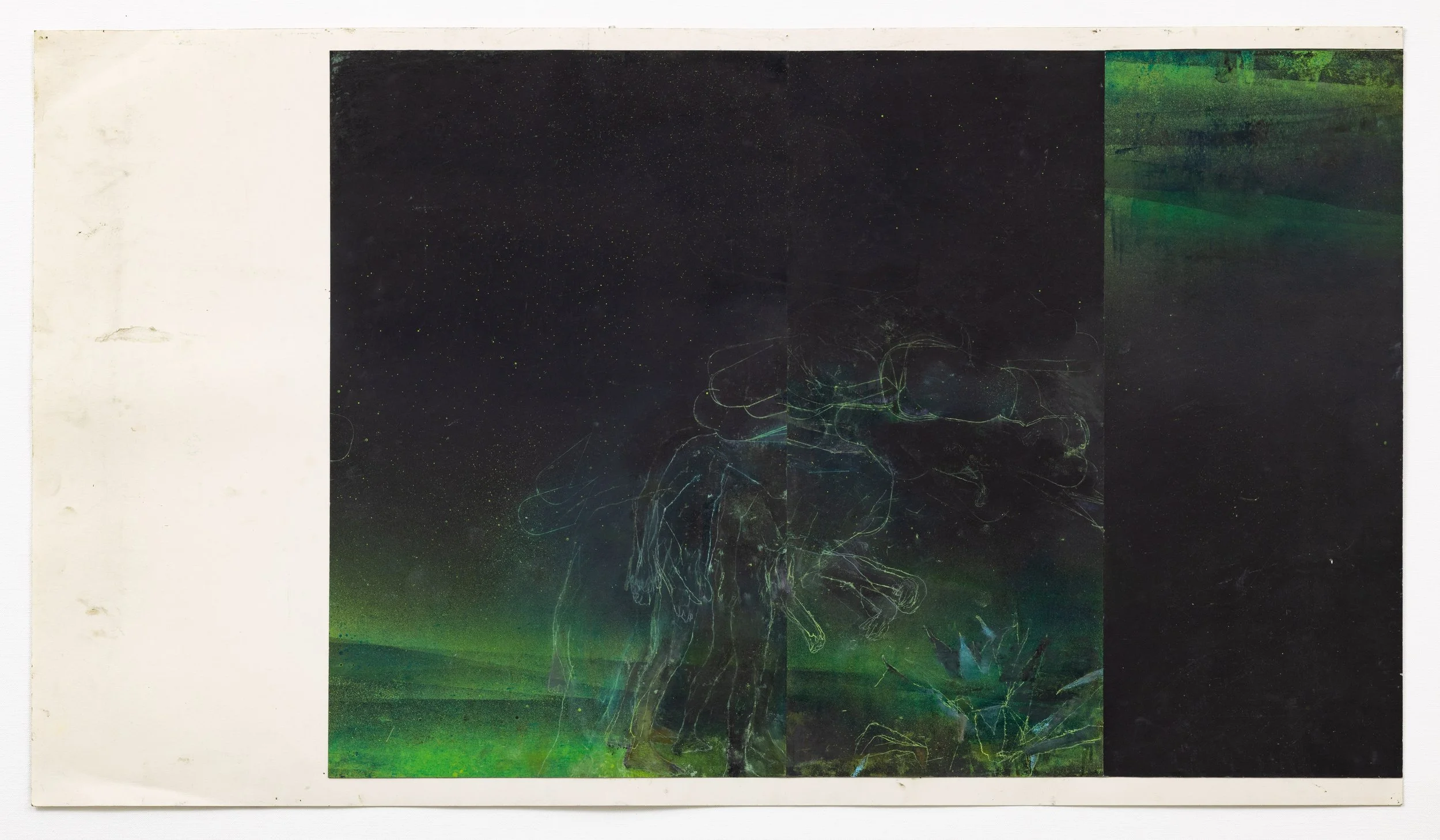
Work on Paper, 2024, oil, enamel, acrylic and pastel on three sheets mounted on paper, 57 x 83.8 cm

Work on Paper, 2024, oil, pastel and pasted paper, 42 x 49 cm
That physical interruption is not cosmetic. It is how the works think. Bodies are divided. Space is uncertain. A figure may begin as a line, disappear into a stain, reappear as a smudge of colour or the ghost of a limb. Oil, pastel, charcoal, crayon, watercolour, acrylic, enamel, ink and pasted paper do not settle into one language. They argue with one another.
This is where the works on paper become particularly compelling. They do not hide the archaeology of the image. They leave it visible. One can see the decisions, repairs, shifts of scale and sudden changes of temperature. The picture is not delivered whole. It is assembled in front of us.

Work on Paper, 2024, oil, pastel and watercolour on two sheets, 40 x 57 cm

Work on Paper, 2025-26, Oil and pastel on paper, 50.8 x 39.1 cm

Work on Paper, 2025-26, Oil, pastel and charcoal on paper, 38.5 cm x 50.8 cm
The body in Mortimer’s work is rarely heroic. It is vulnerable, partial, awkward, exposed, mechanically unstable. This is not simply a contemporary taste for fragmentation. It comes from deeper places in the work: life drawing, medical imagery, childhood hospital experience, an awareness of bodies as things that can be inspected, repaired, damaged and held together.
Even when the figure is barely present, the body carries weight. A line becomes a limb, a stain becomes a wound, a gap becomes a form of presence. The works are not graphic in any simple sense, but they keep returning to the fact of bodily exposure - the figure as something seen, obscured, handled, damaged, hidden or barely recovered.

Work on Paper, 2024-26, Oil and pastel on 2 sheets, 39.4 x 67.4 cm
There is also a digital intelligence running through the work, even when the final image is materially intimate. Mortimer has spoken about glitches, screens, digital construction, found sources and Photoshop. But he does not use digital imagery to make the work feel futuristic. He uses it because broken images are now part of ordinary perception.
The contemporary world enters these works as interruption: a black rectangle, a luminous edge, a distorted interior, a body caught between exposure and deletion. The image appears to have passed through several systems before reaching paper - screen, memory, photograph, hand, erasure, repair.

Work on Paper, 2024-26, Oil, pastel and charcoal on paper 2 sheets, 39 x 56 cm
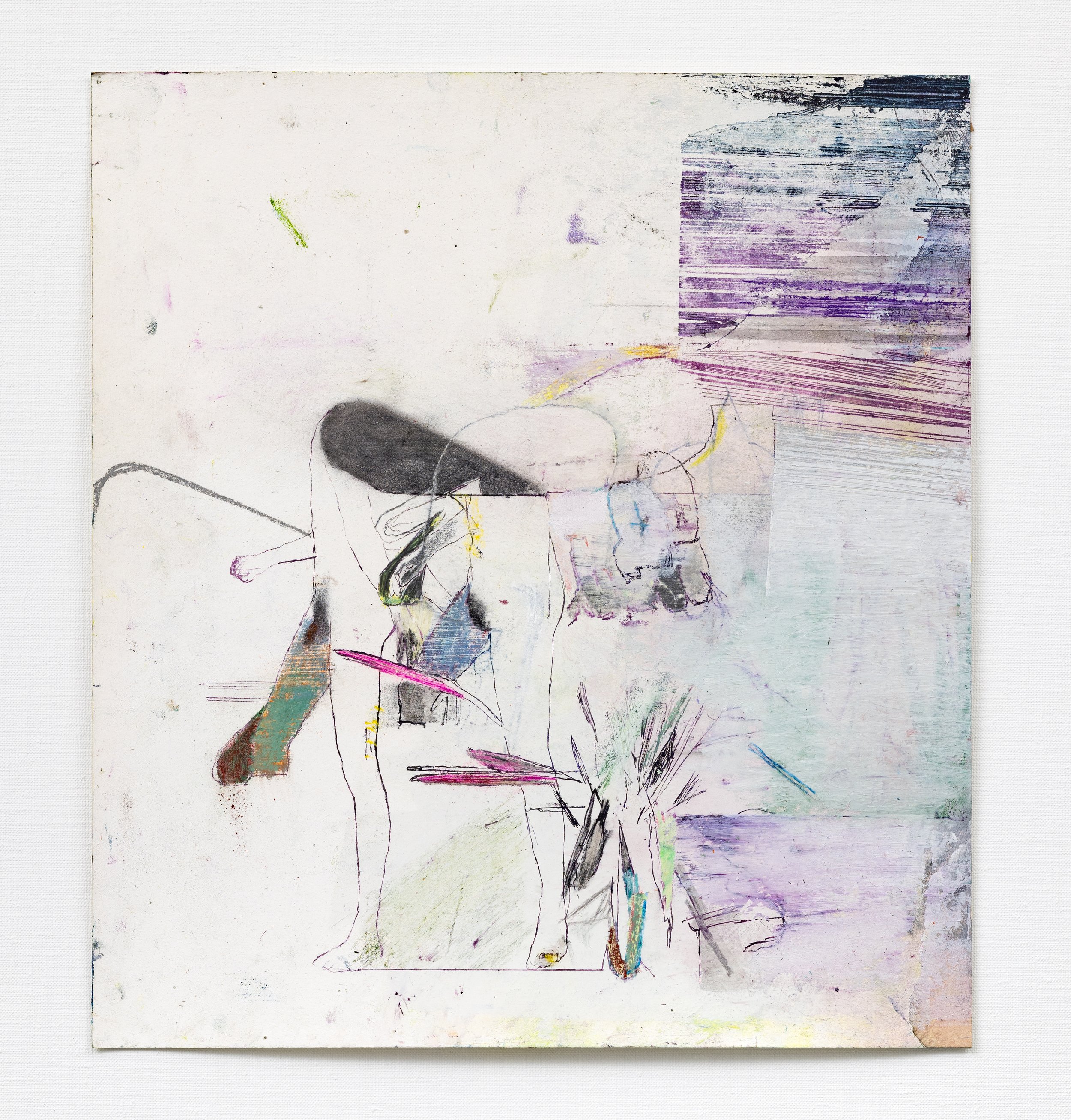
Work on Paper, 2026, Oil, pastel and charcoal on paper, 41.5 x 37.3 cm
There is a temptation to describe Mortimer’s work as dark, but that can flatten it. The better works are not just dark. They are unstable, alert and oddly tender. They understand dread, but they also understand colour, rhythm, surface and the pleasures of making. That tension is what saves them from melodrama.
These works on paper are a particularly good way into Mortimer’s practice because they show the intelligence before it hardens into certainty. They are not minor works. They are where the image is still being negotiated - where the body, the screen, the fragment, the stain and the remembered event are still finding their form.
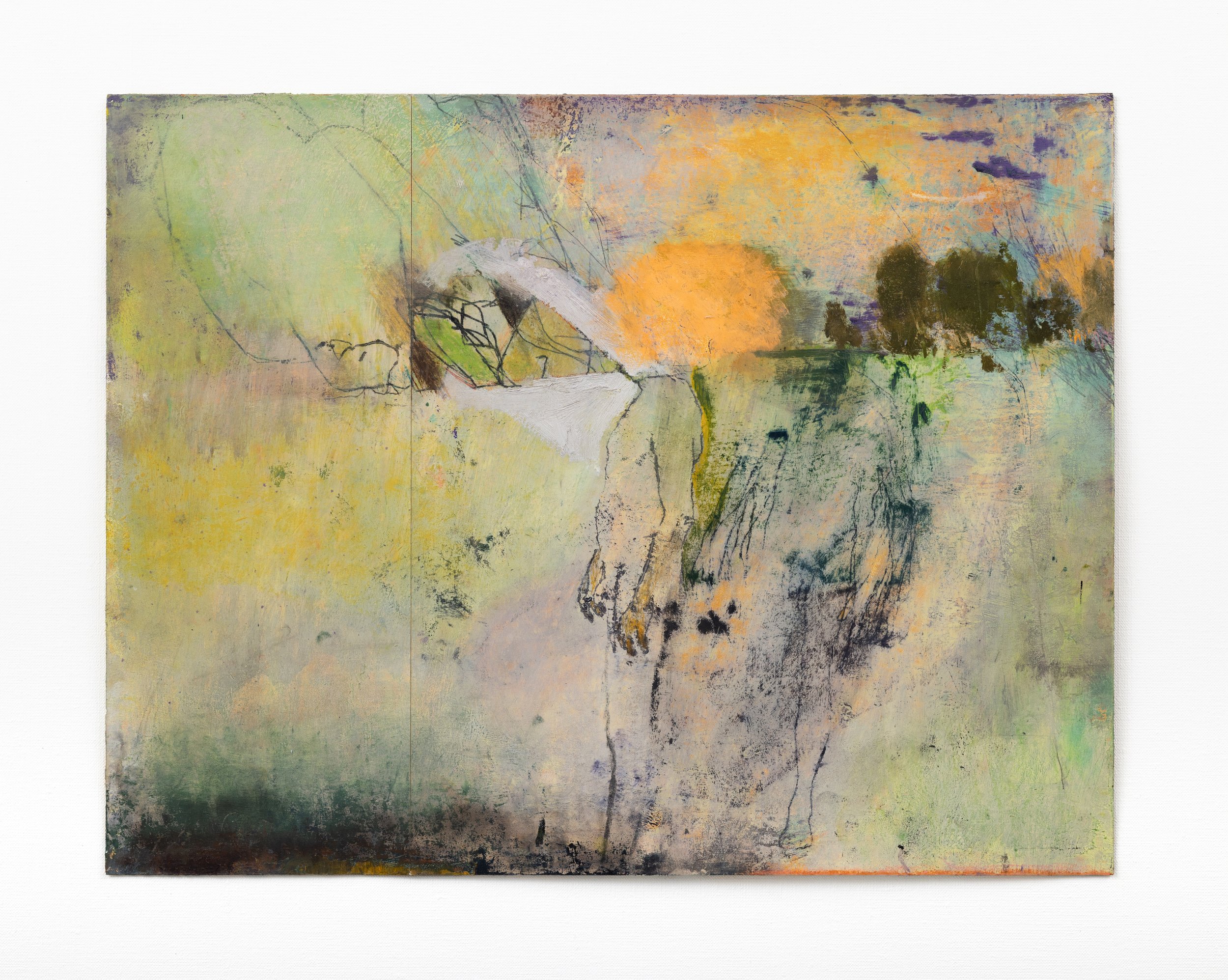
Work on Paper, 2025-26, Oil, pastel and crayon on 2 sheets, 39.4 x 51 cm

Work on Paper, 2026, Oil, pastel and crayon on 3 sheets, 56.3 x 40 cm

Work on Paper, 2024-26, Oil ,pastel and crayon on paper, 42 x 57 cm
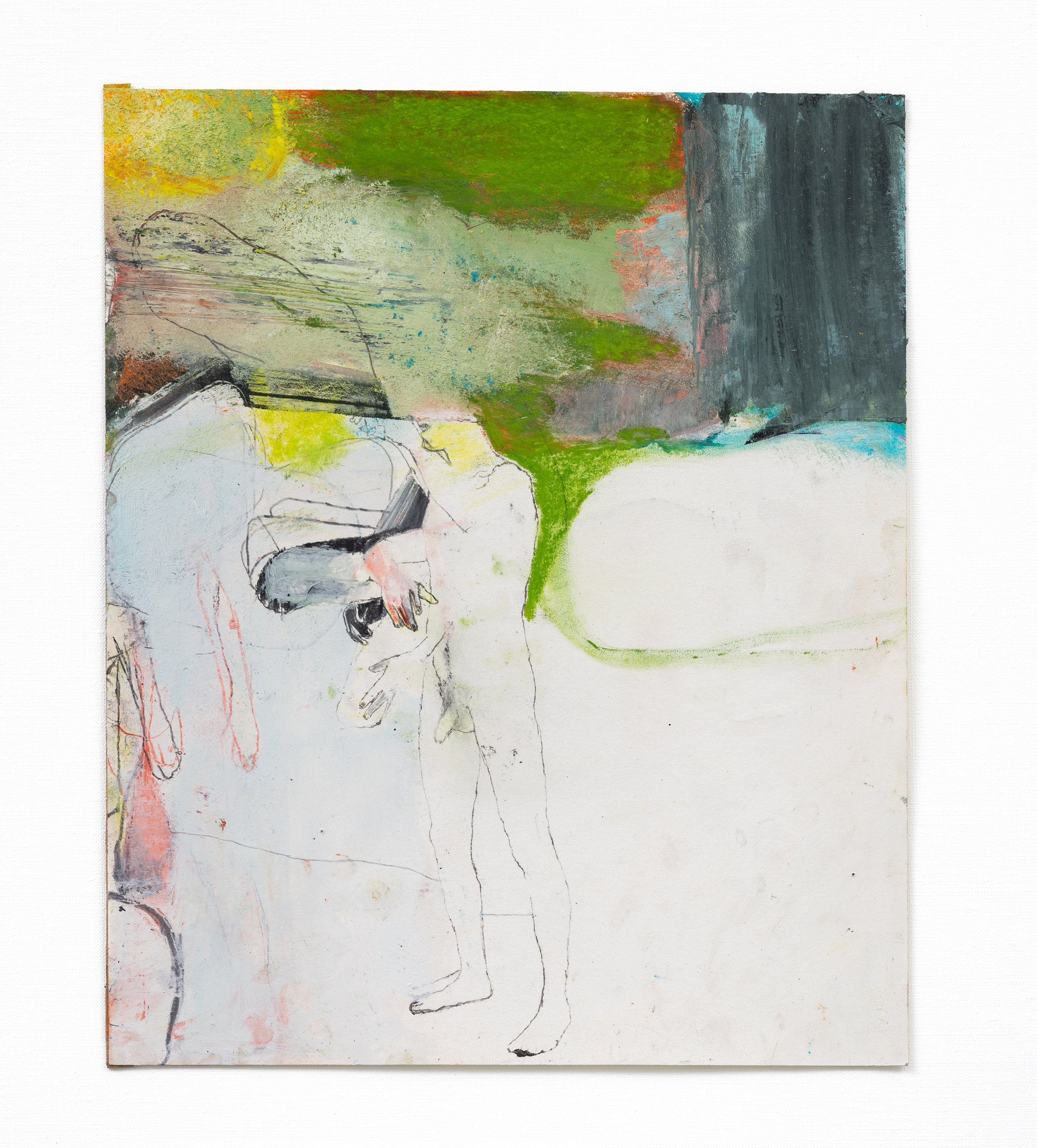
Work on Paper, 2024-26, Oil, pastel and crayon on paper, 42 x 34.5 cm
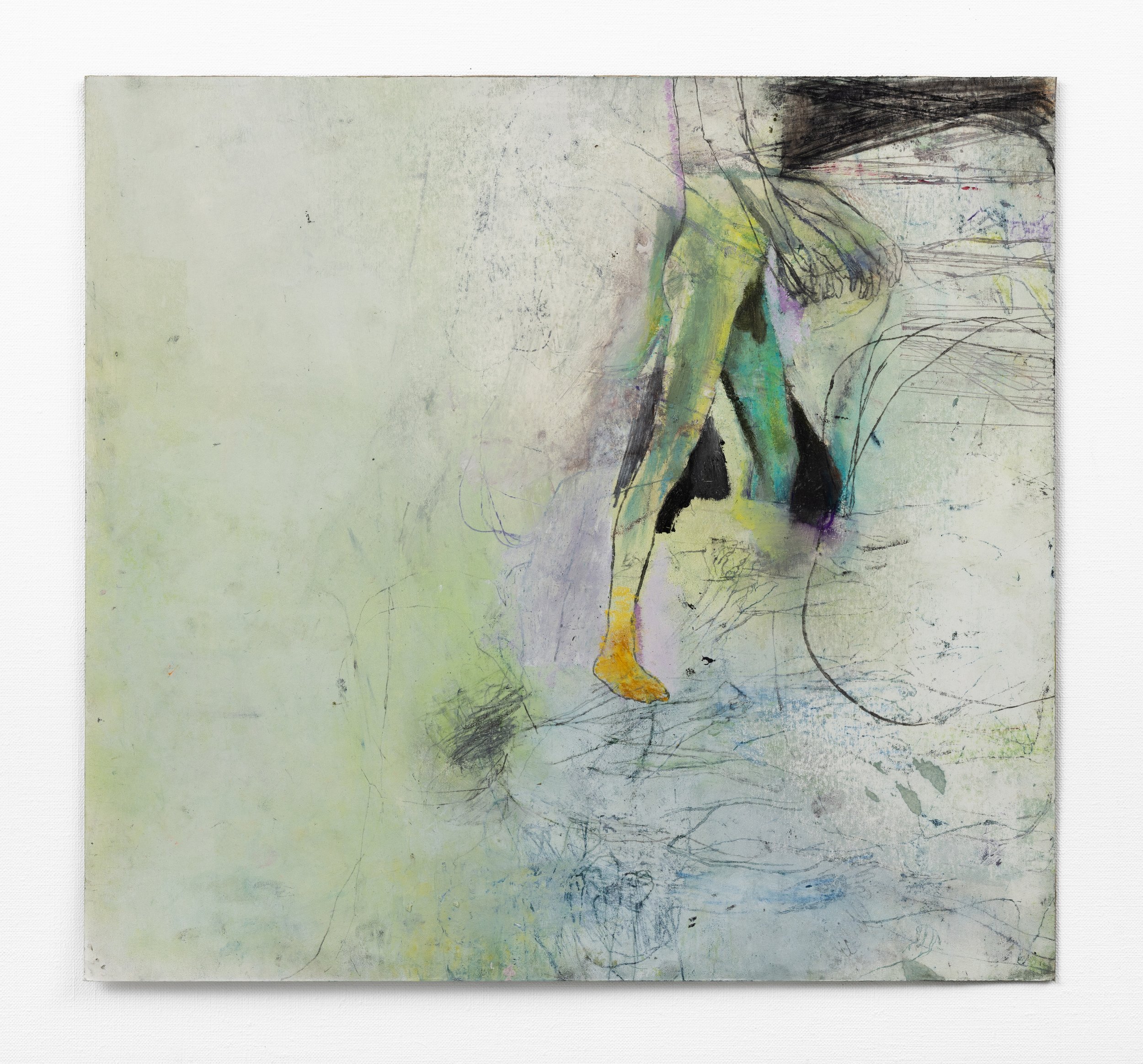
Work on Paper, 2024-26, Oil and pastel on paper, 39 x 41.8 cm

Work on Paper, 2025, Oil, pastel and pasted paper on two sheets, 42 x 59.3 cm
What remains, finally, is not a single story but a set of charged fragments. A figure almost there. A room that might be outside. A landscape that might be a wound. A screen that might be a portal or a blockage. Mortimer’s achievement is to make these uncertainties feel precise. He gives us images that withhold explanation, not out of vagueness, but because the world they describe no longer arrives whole.
These works on paper do not sit at the edge of the practice. They reveal its nervous system. The large paintings may have the scale and force, but here the image is less defended. It is still becoming. That is what gives the works their particular authority: not polish, not finality, but the charge of something seen before it has been made safe.